By Wright Tree Service Team | Reviewed by Robert Wright, Owner, Wright Tree Service
Key Takeaways
Identifying a dangerous tree early is essential to protecting your property and family members from unexpected damage or accidents. Consider these critical points regarding tree safety:
- Regular evaluations by professionals can identify structural weaknesses that are not visible to untrained eyes.
- Weather events and extreme temperature fluctuations in Ottawa often exacerbate existing tree health issues.
- Property owners generally bear liability for damages caused by trees located on their personal land.
- Local municipal bylaws dictate when a permit is necessary for cutting down or removing trees.
- Professional arborists provide the safest route for mitigating risk while maintaining landscape integrity.
What Makes a Tree Hazardous?
A tree becomes hazardous when it develops structural defects that make it likely to fail, potentially causing harm to people or property. This status is not always obvious to a casual observer, as the tree may appear green and full of life while internally rotting or suffering from severe root issues. Environmental stressors and age are common contributors to this decline, often requiring expert intervention to assess the true stability of the wood and crown.
Trees located in urban environments face unique challenges, such as restricted root space, soil compaction, and damage from construction activities. When these stressors pair with an aging root structure or fungal infection, the tree’s ability to withstand high winds or heavy snowfall drops significantly. Recognizing that a tree is no longer a simple piece of nature but a potential threat is the first step toward effective management.
Taking early action is vital to avoid emergency scenarios. By engaging Wright Tree Service for regular property assessments, you can identify these hazards before they reach a critical stage. Catching problems early costs far less than emergency removal after a failure.
7 Warning Signs Your Tree May Be Hazardous
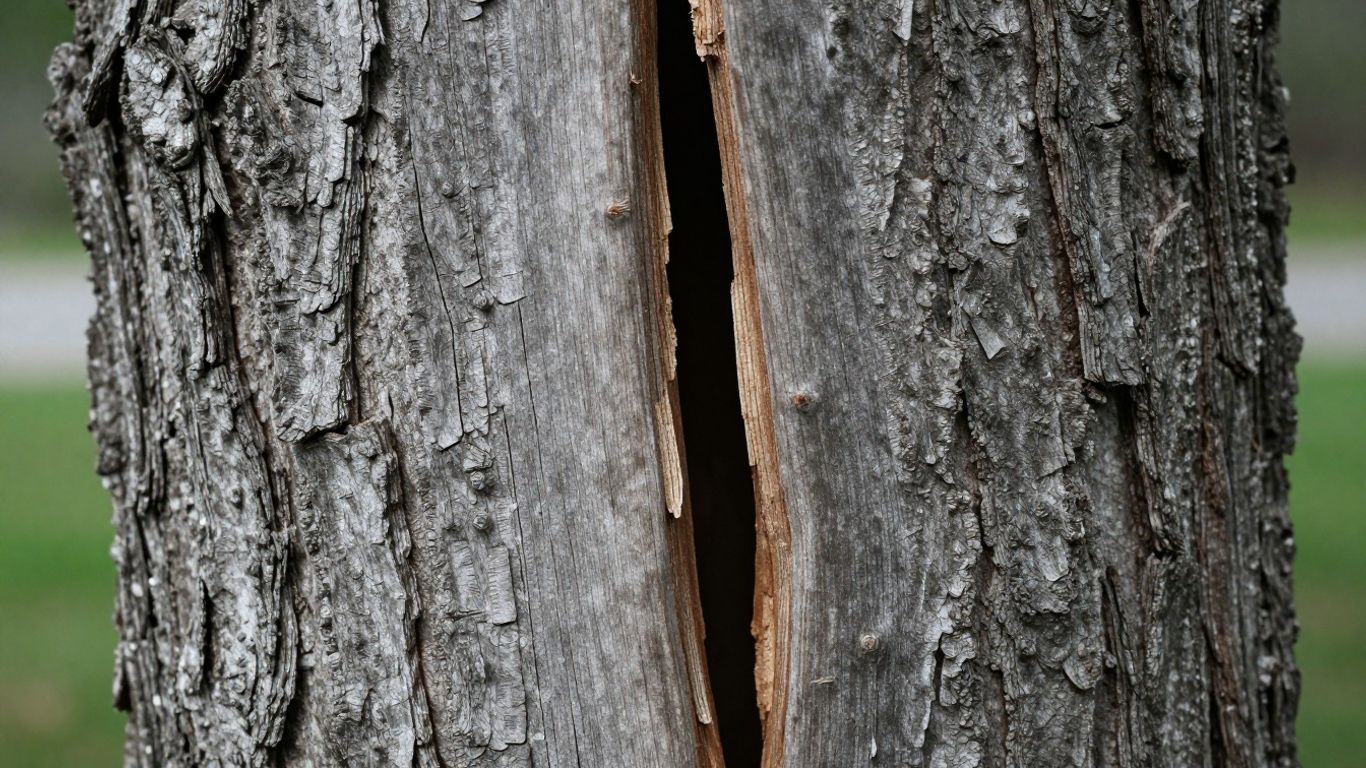
Visible Cracks or Splits in the Trunk
Deep cracks, particularly those that extend into the heartwood of the trunk, indicate structural instability. These splits often appear after significant wind events or heavy ice loading, suggesting the wood is physically failing and may not be able to support the weight of the canopy any longer.
Significant or Sudden Lean
While some trees grow with a natural lean, a tree that has suddenly shifted has likely experienced root failure. If you notice disturbed earth or raised soil on the side opposite the lean, this is a clear sign the tree is precarious and requires immediate review.
Dead or Hanging Branches
Deadwood is a classic indicator that a specific limb or section of the tree has lost its structural connectivity. These branches pose a direct risk to anyone walking underneath, and they often signal that the rest of the branch structure is decaying or dying.
Root Damage or Heaving Soil
Roots are the foundation of a tree, and any disruption—whether from construction or heavy erosion—creates an immediate stability problem. When roots are severed or compacted, the tree can no longer anchor itself properly, especially during saturated wet seasons.
Fungal Growth or Cavities
Fungi growing on the roots or trunk often reveal internal decay. These organisms feed on wood rot, meaning the solid matter providing the tree its strength is being compromised by a disease that you cannot see from the outside.
Bark Loss or Cankers
Patches of missing bark or sunken, discolored areas known as cankers show where the tree is struggling to heal its vascular system. If large sections of the trunk are stripped, the tree’s ability to transport nutrients is failing, which often leads to rapid deterioration.
Proximity to Power Lines or Structures
A tree that is healthy in isolation can still be classified as hazardous if its reach puts it in contact with electrical wires or your home. Even a strong gust of wind could cause branches to whip against infrastructure, causing outages or severe damage to your exterior walls.
Who’s Liable for a Hazardous Tree?
Homeowner and Landlord Responsibility
As a property owner, you are responsible for maintaining the trees on your land. Failure to address trees that are visibly dying or severely compromised can leave you liable for damage they cause to your property, your neighbor’s property, or passersby. Ensuring regular maintenance is a core part of owning domestic real estate.
Shared or Boundary Trees
When a tree sits on the boundary line between two properties, liability can become complex. In many cases, both neighbors share responsibility for maintenance and any costs associated with removal, though local laws vary. Learn more about resolving a neighbour’s hazardous tree dispute in Ontario to protect your rights while keeping things amicable.
Do You Need a Permit to Remove It?
The Immediate Danger Exemption
When a tree presents an emergency risk, municipal authorities often provide an exemption for immediate removal under Ottawa’s tree conservation bylaw exemption rules. However, it is critical to document the condition of the tree through photos or professional reports before it comes down, as you may be required to prove the urgency of the situation to avoid fines. To manage this safely, consult the experts at Wright Tree Service for a formal evaluation.
When an Arborist Report Is Required
For non-emergency removals, you must typically apply for a permit, which often requires an assessment from an arborist holding a recognized credential, such as certification through the International Society of Arboriculture—the same certification our own team holds. The process ensures that healthy, valuable trees are protected from unnecessary removal. The following table summarizes the typical requirements. For the full walkthrough, see our step-by-step Ottawa tree removal permit process:
| Document Type | Purpose | When Required |
|---|---|---|
| Arborist Assessment | Proof of health | For all non-dead trees |
| Permit Application | Official approval | Before removal starts |
| Replacement Plan | Environmental health | Mandatory for large trees |
To ensure you do not face unexpected legal hurdles, consider these steps when planning your hazardous tree removal project:
- Consult the local tree conservation guide to confirm if your specific tree species requires a permit.
- Request an inspection to verify if the tree counts as dead, diseased, or hazardous.
- Submit the permit paperwork well in advance to avoid construction or landscaping delays.
- Keep all correspondence from the municipality as a permanent record for your files.
What to Do If You Spot One
If you believe you have found a dangerous tree on your land, start by keeping people and pets away from the area until a professional can assess it. Establishing a clear safety zone prevents accidental injury if a branch falls suddenly or the tree shifts under the weight of wind or ice. If the tree involves power lines, do not attempt to contact it yourself, as electricity can arc unexpectedly even without direct contact.
Document symptoms of decay or structural failure with clear photographs from multiple angles. These images are helpful for both your property insurance company and municipal inspectors—we’ve had clients need this documentation months later when filing a claim after a partial tree failure. If the situation is urgent, such as storm damage or a fallen limb blocking access, our 24/7 emergency storm damage tree response team can secure the site and coordinate safe removal.
Finally, reach out to a professional who understands the specific tree species and soil conditions common to your area. A trained eye can tell the difference between a tree that simply needs pruning and one that represents a genuine risk, and can recommend the most efficient, least damaging removal strategy.
When to Call a Local Arborist
Searching for a certified arborist near me in Ottawa? Calling one early is the most reliable way to avoid risks associated with DIY tree work. Trees often contain internal stored energy, particularly when they are leaning or damaged, which can cause them to spring back or snap in unpredictable directions if cut improperly. Professionals are trained to control these forces, ensuring that the heavy and complex task of removal is performed without harming your roof, garage, or surrounding garden beds.
Beyond basic removal, a certified expert can perform a deeper health analysis. Our crews have responded to calls across Ottawa and the surrounding areas where a tree looked fine one week and had a visible lean the next, usually after a wind event loosened already-compromised roots. They might suggest bracing or cabling to save a historically significant or beautiful tree that has a fixable structural issue. By choosing Wright Tree Service for these inspections, you ensure that someone with the right equipment and knowledge is making decisions based on valid tree biology, rather than guesswork.
Don’t wait until the tree actually falls to take action. Arborists can identify diseases such as the Emerald Ash Borer or severe structural rot long before a tree loses its integrity. Investing in professional assessment now is significantly cheaper than the costs associated with emergency repairs to a home after a tree collapse, providing you with long-term peace of mind regarding your property safety.
Conclusion
Prioritizing hazardous tree removal is a fundamental part of maintaining a safe and responsible property in an urban or suburban landscape. By watching for warning signs, respecting municipal permitting processes, and working with licensed experts, you can manage the risks of the natural world without compromising your home’s security. Swift, informed action ensures that your trees remain a benefit to your outdoor space rather than a hidden burden waiting to fail.
Don’t wait until a hazardous tree fails. Contact Wright Tree Service’s tree removal and felling team for a full property assessment, or call us directly at 613-898-0698.
Frequently Asked Questions
How can I tell if my tree has internal rot?
Internal rot is often hidden beneath healthy-looking bark. Still, the presence of persistent fungal growth at the base of the trunk or deep, sunken cavities is a common indication of decay that requires professional investigation.
Is it safe to leave a dead tree standing?
Dead trees are generally unstable and harbor pests or diseases that can spread to other plants in your yard. They also significantly increase the risk of property damage during storms, so they should be removed promptly.
What should I do if my neighbor’s tree is leaning toward my house?
Start by having a polite conversation with your neighbor and document the concern with photos. If you cannot reach a mutual agreement on an inspection, consult your local municipality regarding the property line and hazard bylaws.
How much does hazardous tree removal cost?
Costs for removal vary widely based on the tree size, location, accessibility, and the complexity of the felling required, especially for trees situated near fences or power lines. See our full Ottawa tree removal cost guide for a detailed price breakdown.
Can a tree be saved if it looks dangerous?
In some instances, professional arborists can stabilize a tree using specialized cabling or bracing systems that reduce strain on weak limbs, potentially extending the tree’s lifespan if the underlying structural issue is localized.
What time of year is best for professional tree removal?
Winter is often ideal, since bare branches make structural defects easier to spot. Read why winter can be the best time for removal for the full breakdown.
Does homeowners insurance cover removing a hazardous tree?
Many insurance policies cover damage caused after a tree falls, but they rarely pay for the proactive removal of a dangerous tree unless it has already caused structural damage to a covered portion of your property.