You know, it’s a real pain when a neighbour’s tree starts causing problems on your property here in Ontario. Maybe branches are scraping your roof, or roots are messing with your driveway. It’s a common issue, and honestly, it can be pretty stressful. You want to get it sorted without causing a huge fight with the people next door. This guide walks you through everything you need to know about a neighbour’s tree damaging my property in Ontario — your rights, your options, and when to call a professional.
Key Takeaways
- If a neighbour’s tree is damaging your property in Ontario, document everything thoroughly with timestamped photos and written notes before taking any action.
- Talk to your neighbour calmly and politely about your concerns before considering any further action.
- Getting a certified arborist’s report can provide professional assessment and evidence for insurance or legal purposes.
- For trees on city property or if the situation is an immediate hazard, contact your local municipality (like 311 in Ottawa).
- You have the right to trim branches and roots up to your property line, but you must not damage the tree or trespass onto your neighbour’s land.
When a Neighbour’s Tree Becomes Your Problem
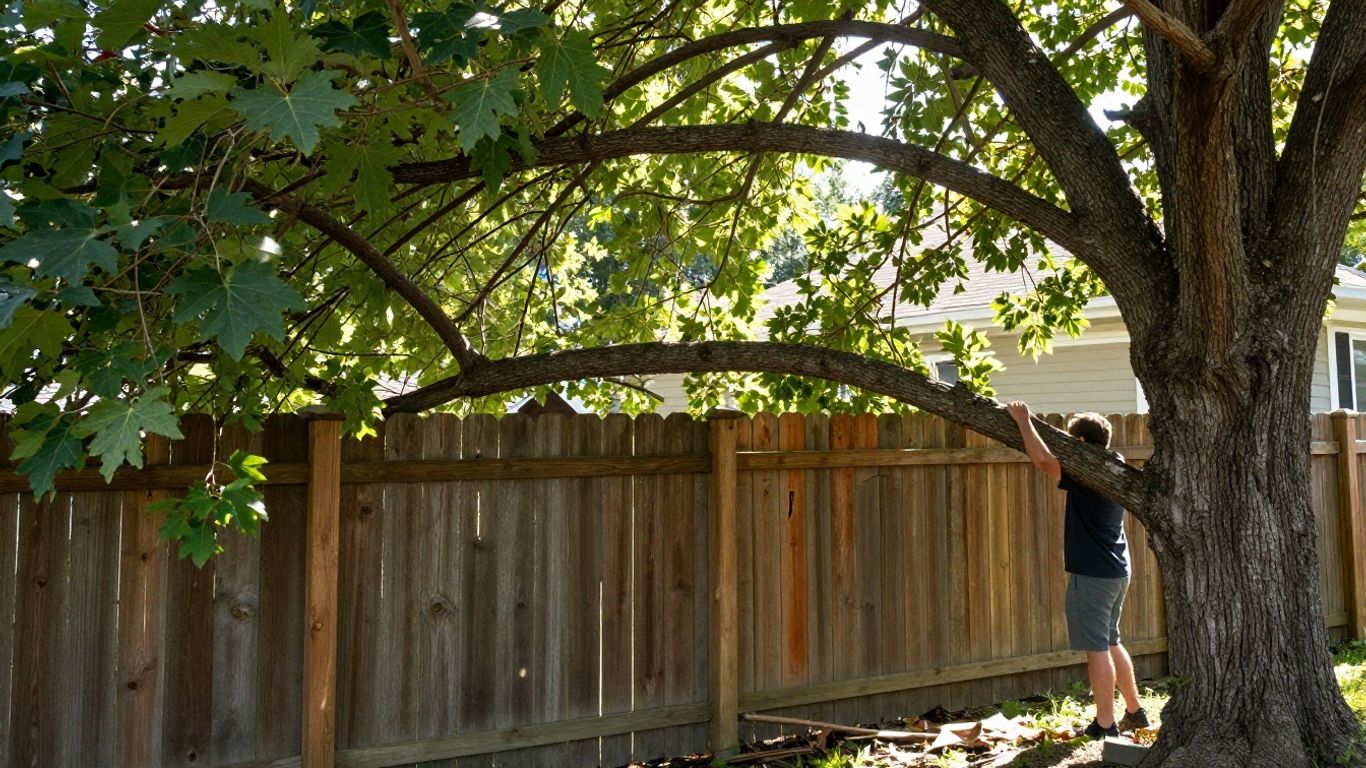
It’s a situation many homeowners in Ontario dread: a beautiful, mature tree on your neighbour’s property starts causing headaches. Maybe its branches are creeping over your fence, dropping leaves and debris into your yard, or worse, its roots are starting to buckle your driveway or threaten your home’s foundation. It’s easy to feel frustrated, especially when you didn’t plant the tree and have no control over its growth. When a neighbour’s tree starts impacting your property, it can quickly turn a friendly relationship sour.
Understanding your rights and responsibilities is the first step. It’s not always as simple as pointing fingers; the ownership of the tree and the nature of the damage play significant roles in how you can address the issue. Sometimes, a simple conversation is all it takes, but other times, you might need to get more formal.
Here’s a breakdown of what you might be facing:
- Overhanging Branches: Leaves, twigs, and larger branches falling onto your property can be a nuisance, requiring constant cleanup.
- Root Intrusion: Tree roots can spread underground, potentially damaging underground pipes, foundations, patios, or driveways.
- Structural Damage: In severe cases, a large tree or its falling branches could cause significant damage to your home or other structures.
- Health Concerns: If the tree is diseased or dying, it might pose a risk of falling, especially during storms.
Dealing with a neighbour’s tree can be tricky. It’s important to remember that you can’t just go onto their property to trim branches or remove roots without potentially causing more problems for yourself. Always consider the property line and local rules before taking any action.
Before you get too worried, it’s worth checking out the Ottawa tree removal permit if you’re in the city, as they can offer specific guidance on Ottawa tree protection bylaws .
Who Actually Owns the Tree? (It’s Not Always Obvious)
When a tree starts causing problems, like branches drooping over your fence or roots making your walkway uneven, the first big question is: who does this tree actually belong to? It sounds simple, but it’s not always as straightforward as you might think. The ownership, and therefore responsibility, often comes down to where the tree’s trunk is located in relation to your property line.
What Is a Boundary Tree Under Ontario Law?
Generally, if the entire trunk of the tree sits squarely on your neighbour’s property, then the tree is theirs. They own it, and they’re usually responsible for it. However, things get a bit more complicated if the tree’s trunk is right on the property line itself. In this case, it’s considered a ‘boundary tree,’ and under Ontario law, you and your neighbour are considered co-owners. This means you both share responsibility for the tree, and neither of you can do anything drastic, like cutting it down or doing major pruning, without the other person’s agreement.
It’s also worth noting the difference between a boundary tree and a ‘border tree.’ A border tree is one whose trunk is close to, but not actually on, the property line. In this scenario, the tree is still considered to belong to the neighbour whose property it’s on, even if its branches or roots extend over the line.
So, how do you know for sure where that property line is? Sometimes a fence or a hedge gives a clue, but these aren’t always the legal markers. The most reliable way to find out is to check your property survey, which you might have received when you bought your home. If you don’t have one, you can hire a registered land surveyor to come out and officially mark the boundaries. This can cost a few hundred dollars, but it can save a lot of headaches down the road.
Is Your Neighbour Legally Responsible for the Damage?
If you’re dealing with a neighbour’s tree damaging my property in Ontario, the first question most homeowners ask is : who’s actually responsible? Branches are scraping your roof, roots are messing with your foundation, or maybe you’re just worried a big old oak is going to come down in the next storm. It’s a common headache for homeowners, and the big question is: who’s on the hook for the mess?
Generally speaking, your neighbour isn’t automatically responsible for damage caused by their tree. It’s not like they’re liable just because a branch falls. However, this changes if you can prove negligence. Under Ontario property law, this also falls under the concept of private nuisance — your neighbour has a legal duty of care to prevent their trees from causing foreseeable harm to your property .
What Counts as Negligence in Ontario Tree Disputes?
Negligence basically means your neighbour didn’t act with reasonable care. Think about it this way: did they know, or should they have known, that their tree was a problem? Did someone warn them about a diseased branch or a shaky trunk?
Here’s a breakdown of situations and who might be responsible:
- Healthy Tree Falls in a Storm: If a perfectly healthy tree gives way during a major storm (often called an “Act of God”), your neighbour is generally not liable. Your own home insurance would typically cover any resulting damage to your property.
- Diseased or Neglected Tree: If the tree was visibly dead, rotting, or leaning dangerously, and your neighbour was warned or should have reasonably noticed, they can be held liable for negligence.
- You Reported It and They Ignored It: If you formally notified your neighbour in writing about a hazardous tree and they did nothing, that documentation significantly strengthens a negligence claim.
- Key takeaway: Liability almost always comes down to what your neighbour knew, and when they knew it.
What You’re Legally Allowed to Do Yourself
Okay, so your neighbour isn’t budging, and the branches are getting out of hand, or maybe the roots are starting to look a bit concerning. What can you actually do yourself without getting into trouble? Under Canadian common law, there’s a concept called the ‘self-help rule’. Basically, if branches or roots from your neighbour’s tree are creeping onto your property, you have the right to trim them back. But, and this is a big but, you can only cut what’s on your side of the property line.
Think of it like this:
- Stay on your side: You absolutely cannot step onto your neighbour’s property to do the trimming or root-cutting unless you have their explicit permission. That’s trespassing, plain and simple.
- Don’t kill the tree: While you can trim, you can’t go overboard and damage the tree to the point where it dies or becomes unhealthy. This means no hacking away at the main trunk or removing a huge chunk of the canopy. There are limits, and sometimes local bylaws might specify how much you can prune, especially for larger trees.
- Clean up your mess: Whatever you trim off – branches, leaves, roots – is your responsibility to dispose of. Don’t leave it piled up on your lawn or, worse, toss it back over the fence.
It’s a bit of a delicate balance. You have the right to protect your property from encroachment, but you also need to respect your neighbour’s property and their tree. If you’re unsure about where the property line actually is, it might be worth looking into getting a land survey done. It’s better to know for sure than to guess and end up causing more problems.
Step-by-Step: What To Do When a Neighbour’s Tree Is Damaging Your Property
Dealing with a neighbour’s tree that’s causing problems on your property in Ontario can be a real headache. It’s not always straightforward, but there are steps you can take. The key is to be methodical and keep good records from the very beginning.
Step 1 — Document Everything First
Before you even think about talking to your neighbour or doing anything else, grab your phone or camera. You need a solid record of the issue. Take clear, timestamped photos and videos from different angles. Note down the date, the weather conditions (was it windy? raining?), and exactly what damage you’re seeing or what risk the tree poses. If branches have already fallen, get pictures of the debris on your property and where it came from on the tree. This documentation is super important if you end up needing to file an insurance claim or if things go to court. It’s your proof.
Step 2 — Talk to Your Neighbour
Honestly, the best-case scenario is a friendly chat. Your neighbour might not even realize their tree is causing trouble. Approach them calmly and explain the specific problems – maybe a big branch is hanging right over your roof, or you can see roots pushing up your driveway. Suggest getting a professional arborist to take a look together. Often, people are willing to share the cost of trimming or removal once they understand the risk. If they’re not responsive, or if you’d prefer a more formal approach, you can write a polite letter outlining your concerns and what you’ve observed. Keep a copy of this letter for your records.
Step 3 — Get a Certified Arborist Assessment
If the conversation goes well, or even if it doesn’t, getting a professional opinion is a smart move. Hire a certified arborist (someone certified by the International Society of Arboriculture, or ISA). They can properly assess the tree’s health, structural integrity, and whether it’s actually a hazard. Their written report is gold. It provides objective evidence that can help convince your neighbour, support an insurance claim, or be used if you need to contact the city or a lawyer. This report is key for any formal steps you might need to take regarding your neighbour’s tree damaging your property in Ontario. This is where Wright Tree Service can help. Our ISA-certified arborists provide written hazard assessments you can use for insurance claims, neighbour disputes, or legal proceedings. Get a free assessment or call us at +1 613-898-0698.
Step 4 — Contact Your Municipality or Local Bylaw Office
If the tree is on city property, like a boulevard, or if your neighbour is completely uncooperative and the tree is an immediate danger, it’s time to involve the authorities. In Ottawa, you’d call 311. Other municipalities have similar services. They can inspect the tree and, if necessary, issue orders to the property owner. Be aware that response times can vary, especially during severe weather. If the tree is protected by a local bylaw, you might need a permit for any significant work, even if it’s an emergency.
Step 5 — File an Insurance Claim or Pursue Legal Action
If damage has already happened, or if the situation is serious and your neighbour still won’t act, you might need to look at insurance or legal options. Your home insurance might cover some of the damage, but it’s important to check your policy details. If the damage is significant, or if you need to force the issue, you may need to consult a property lawyer. They can advise you on your rights and the best course of action under Ontario law. If you receive a Statement of Claim for tree-related property damage, it’s important to review it carefully to understand the specific damages alleged.
Does Your Home Insurance Cover a Neighbour’s Tree?
It’s a question many homeowners grapple with: if a neighbour’s tree causes damage to your property, who foots the bill? Generally, your own home insurance policy is designed to cover damage to your property, regardless of where the offending tree is located. This means if a healthy tree from next door falls onto your house during a storm, your insurance should step in to help with repairs.
However, the situation gets a bit more complicated if the tree wasn’t healthy. If the tree was visibly diseased, dead, or in a state of disrepair, and your neighbour was aware of this or should have reasonably known, they might be considered negligent. In cases of proven negligence, your neighbour could be held responsible for the damages, and their insurance might be involved. This is where having solid documentation, like an arborist’s report , becomes really important.
Here’s a quick rundown of common scenarios:
- Healthy tree falls during a storm (“Act of God”): If the tree was healthy and fell due to severe weather, it’s typically considered an Act of God. Your home insurance covers the damage to your property, and your neighbour is generally not liable.
- Diseased or dead tree falls due to neglect: Your neighbour may be liable if negligence can be proven. You might need to file a claim with your insurance first, and they may then seek recovery from your neighbour.
- Tree roots causing damage (e.g., to foundation or driveway): This is often viewed as a gradual issue. Your insurance might cover some repairs, but proving negligence on the neighbour’s part can be challenging and may require legal advice.
- Branches overhanging and causing minor issues: While your insurance might not typically cover minor issues like branches scraping your roof, you generally have the right to trim them back to your property line yourself.
Remember, even if your neighbour is ultimately responsible, you’ll likely need to file a claim with your own insurance company first. They have processes in place to handle these situations and may pursue reimbursement from the responsible party or their insurer.
When You Need a Professional — Don’t Wait Until It’s an Emergency
When a neighbour’s tree is damaging your property in Ontario, it’s tempting to handle it yourself — trim a branch here, ignore a root there. But the truth is, small tree problems can get out of hand quickly—sometimes overnight. Calling in a certified arborist early can keep a nagging concern from turning into a real disaster. Here are some signs it’s time to hire a professional instead of waiting it out:
- You see dead or cracked branches hanging over your home, driveway, or power lines.
- Your neighbour’s tree is shedding big limbs during storms, or you hear loud cracking sounds in windy weather.
- Roots are pushing up your walkway or foundation and you’re seeing new cracks or uneven ground.
- The tree looks diseased (mushy bark, mushrooms around the base, or lots of lost leaves out of season).
- You’ve already talked to your neighbour, and nothing’s changed—or they weren’t interested in fixing the problem.
If you put off calling for help, you’re really just hoping nothing bad happens on your watch. Trees can come down fast with a little wind or heavy snow. A professional risk assessment will:
- Show you issues that aren’t visible to the untrained eye
- Give you a written report you can share with your insurance company or neighbour
- Provide better documentation if you need to go the legal route (and yes, sometimes you do!)
And remember, if things progress past friendly talks and you need legal support, consulting a licensed property lawyer can help you understand your options and take action without unnecessary stress or cost.
Wright Tree Service Helps Ontario Homeowners Resolve Tree Disputes Safely
Dealing with a neighbour’s tree that’s causing problems can be a real headache. You might be worried about damage to your home, or maybe branches are constantly falling into your yard. It’s a situation many homeowners find themselves in, and it can get complicated fast. At Wright Tree Service , we understand the ins and outs of tree care and can help you sort out these tricky neighbourly disagreements — quickly and professionally.
Getting a certified arborist involved early is often the smartest move. We give you a clear, objective assessment of the tree’s health and any potential risks it poses. This report is not just for your peace of mind — it’s solid evidence you can use if you need to talk to your neighbour formally, file an insurance claim, or contact the city. It takes the emotion out of the situation and focuses on the facts.
Here’s what we bring to the table:
Professional Assessment: We identify issues like disease, structural weakness, or dangerous overhanging branches that are easy to miss. Our written arborist report gives you something concrete to act on.
Safe Removal or Pruning: If the tree needs to be trimmed or removed, we have the equipment and expertise to do it safely — especially when it’s close to your home or power lines.
Documentation Support: Our arborist reports provide the documentation your insurance company or lawyer may require, often a critical step in resolving disputes.
Preventative Care: Sometimes a single pruning visit prevents a major problem down the line. We’ll advise you on the best course of action to keep your property protected.
When a tree issue escalates, it’s easy to feel overwhelmed. We’re here to make it manageable. Professional tree removal costs in Ottawa vary depending on the size and complexity of the job — contact us today for a free quote specific to your property.
Conclusion
So, if a neighbour’s tree is damaging your property in Ontario, you’ve got more options than you might think — and you don’t have to handle it alone. If you’re unsure where to start, the fastest and smartest first move is getting a certified arborist on-site. Wright Tree Service offers free property assessments across the Ottawa area — call us today or fill out our contact form and we’ll get back to you within 24 hours.
Frequently Asked Questions
Can I just cut branches from my neighbour’s tree that hang over my property?
Yes, you can trim branches and roots that cross the property line, but only up to the line itself. You can’t go onto your neighbour’s property without their permission, and you must be careful not to harm or kill the tree. It’s also a good idea not to remove more than about a quarter of the tree’s leaves at once.
Who has to pay if my neighbour’s tree falls and damages my fence?
If the tree was healthy and fell because of a storm, your home insurance usually covers the fence repair. However, if the tree was clearly sick or dead, and your neighbour knew about it but didn’t do anything, they might be responsible for the cost. Always take pictures of the tree’s condition before and after it falls.
What if the tree is on city property, like a boulevard?
If the tree is on city land, you should contact your local municipality, often by calling 311 in Ottawa. The city is responsible for trees on public property and can deal with any issues or hazards they present.
How do I prove my neighbour was negligent if their tree damaged my property?
Proving negligence means showing that your neighbour knew or should have known their tree was dangerous and didn’t take reasonable steps to fix it. Documenting everything is key: take photos and videos, keep a written record of when you noticed problems, and note any warnings you gave your neighbour. This evidence is crucial if you need to make an insurance claim or take legal action.
Should I hire a professional to check the tree?
Absolutely. Getting a report from a certified arborist is a smart move. They can tell you if the tree is unhealthy, unstable, or dangerous. This professional opinion is very helpful for convincing your neighbour to act, and it’s also important evidence for your insurance company or if you end up in a legal dispute.
What’s the best way to approach my neighbour about a problem tree?
Start with a friendly chat. Your neighbour might not even know there’s an issue. Clearly explain your concerns and the risks the tree poses. If talking doesn’t work, or if you want a record of the conversation, follow up with a polite letter. Sometimes, suggesting you both get an arborist’s opinion together can help resolve things peacefully.