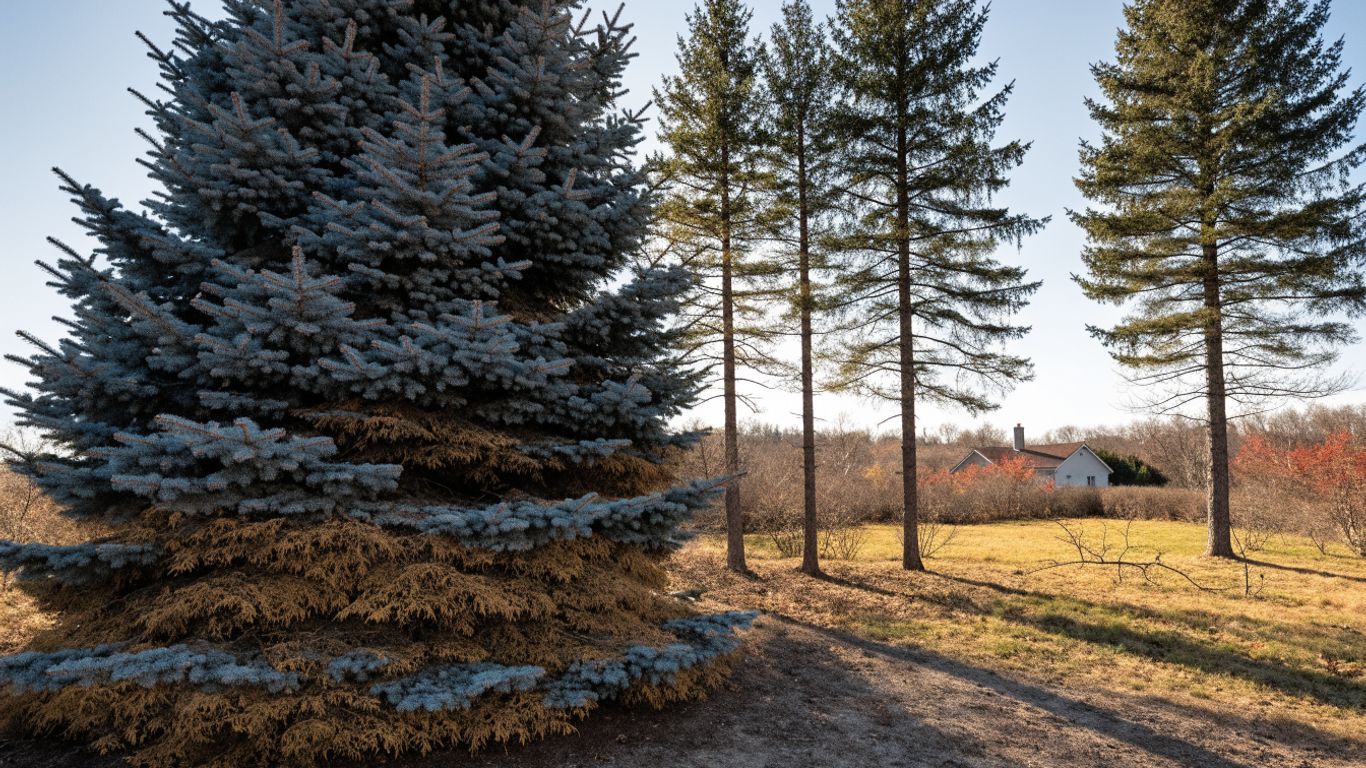
A spruce tree turning brown from the bottom is one of the most common evergreen problems Ottawa homeowners notice, and it often shows up suddenly after a wet spring or a harsh winter. Sometimes it’s nothing more than old inner needles shedding naturally. Other times it points to a disease such as spruce needle cast or Cytospora canker, which can slowly work its way up the tree if it isn’t caught early. Below, you’ll learn the most common causes, how to tell them apart by looking at the needles and bark, whether the tree can recover, and when it’s time to call a certified arborist.
Key Takeaways
Browning at the bottom of a spruce can have several causes, from fungal disease to ordinary needle shedding. Where the browning starts, and what you see on the needles, branches and trunk, can help you decide what to do next.
- Check whether the browning affects inner needles, whole lower branches or one side of the tree.
- Black specks on needles can point to spruce needle cast. White resin on branches may indicate Cytospora canker.
- Drought, compacted soil, winter exposure and road salt can stress spruce roots and foliage.
- Brown needles will not turn green again, and spruce cannot regrow needles on bare sections of a branch. Green buds and flexible branches show which parts of the tree are still alive.
- If the damage is spreading or the tree may be unsafe, ask a certified arborist to assess it.
Spruce Tree Turning Brown From the Bottom: The Short Answer
If your spruce tree is turning brown from the bottom, the cause is usually a fungal disease, environmental stress or normal shedding of older needles. The pattern matters. A few brown needles near the trunk are very different from lower branches that are losing needles and becoming bare. Look closely before deciding that the whole tree is dying.
Spruce needle cast and Cytospora canker are the two most common diseases behind this pattern, especially when browning spreads or branches die back. Dry soil, poor drainage, winter burn and road salt can also cause damage that begins low on the tree. Spruce problems often look similar to other common tree diseases and infestations found in Ottawa, so a close look at the needles and bark matters.
The pattern of browning is a useful first clue, but it cannot confirm a diagnosis by itself. Check whether the affected needles are old or new, whether the branch tips are still alive, and whether you can see spots, resin or damaged bark. If browning keeps spreading, a certified arborist can inspect the tree and its growing conditions.
6 Common Reasons a Spruce Tree Turns Brown From the Bottom Up
Several different problems can make a spruce look brown from its lower branches upward. Some affect the needles first, while others weaken branches or roots over time. The symptoms below can help you narrow down what may be happening, but a tree can be dealing with more than one stressor at once.
Spruce Needle Cast (Rhizosphaera)
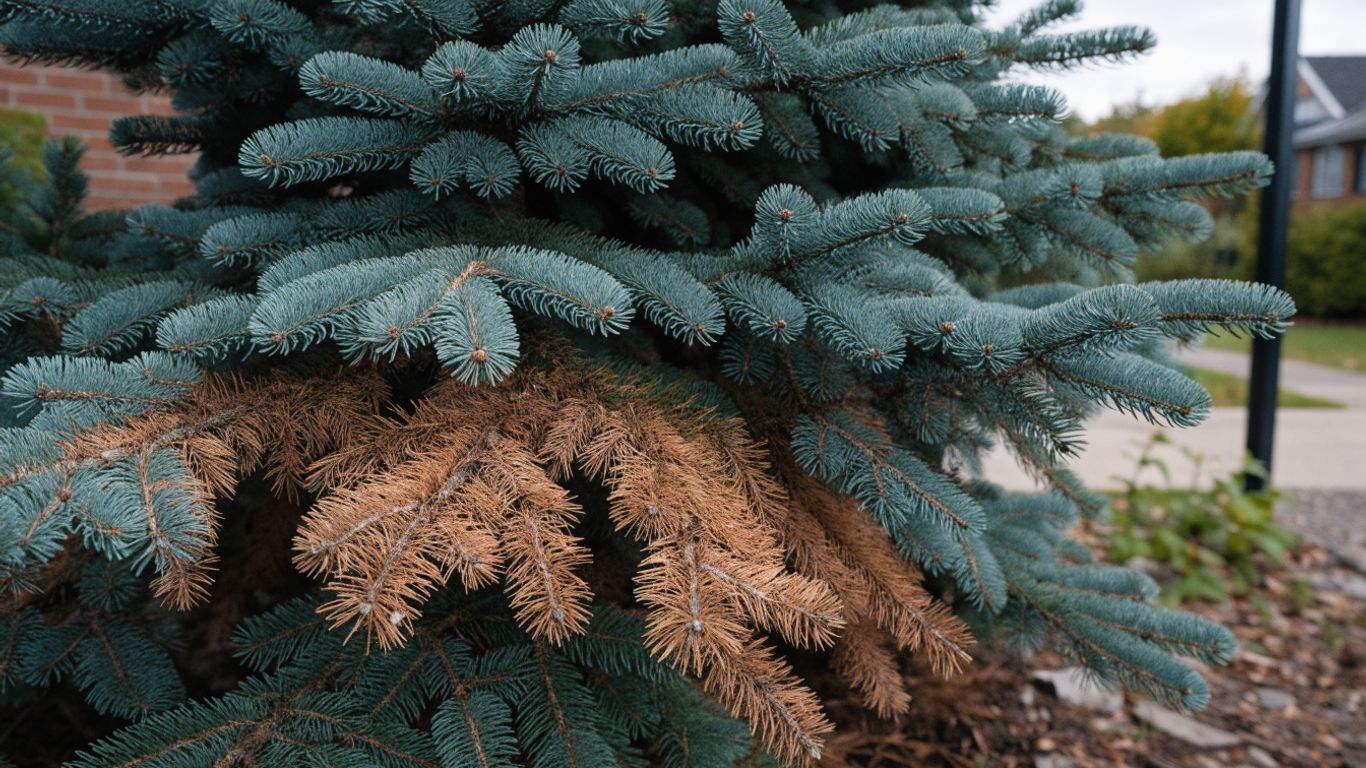
Rhizosphaera needle cast is a fungal disease that mainly affects Colorado blue spruce. Other spruce species are affected only occasionally. It usually starts on older needles on the lower branches and works its way up the tree over several seasons. Infected needles turn yellow, then brown or purplish-brown, and eventually fall, leaving bare areas on the branch.
Small black specks lined up in rows along the needles are a key sign. These are the fungus’s fruiting bodies, sitting in the needles’ breathing pores. Infection mostly happens on wet spring days, but browning often doesn’t show until later in the season. After three to four years of heavy needle loss, affected branches may begin to die. Agriculture and Agri-Food Canada has an overview of the disease and how it spreads.
Cytospora Canker on Spruce
Cytospora canker kills individual branches. It often starts on the lower part of a spruce and moves inward along a branch toward the trunk. It is most common on older or stressed trees. Look for dead bark, and for white or bluish resin on the bark around affected branches. Unlike needle cast, Cytospora usually turns a whole branch brown at once rather than thinning needles gradually, though an in-person assessment may be needed to confirm the cause.
Lower Branches Not Getting Enough Sunlight
When a spruce grows in shade, or its lower limbs are crowded by nearby trees, shrubs or structures, those branches may get too little light to stay vigorous. Older inner needles thin and drop, and shaded lower growth gradually looks sparse. This change is usually slow and happens over years, not as a sudden wave of browning across several branches.
Drought and Root Stress
A spruce under drought stress may not have enough water to support its needles, especially if it was planted recently or its roots are restricted by compacted soil. Waterlogged soil can also starve roots of air, so adding more water is not always the answer. Check the soil around the root zone, and consider whether drainage, recent planting or nearby construction could be affecting the tree. Recovery takes time, and how long a tree takes to recover from drought stress depends on how severe and how long the dry spell was.
Winter Burn and Road Salt Damage
Cold, drying winds and winter sun can pull moisture from exposed needles while the ground is frozen and the roots can’t replace it. That foliage is often brown by spring. Spruce trees beside salted roads, walkways or driveways can also take damage from salt spray or from salt moving through the soil. Damage is usually most visible on the side facing the exposure, which is a helpful clue when you inspect the tree. Deep watering before freeze-up and a few other steps for getting your trees ready for winter in Ottawa can reduce this kind of injury.
Normal Inner Needle Shedding
Spruce trees naturally shed some of their oldest inner needles, usually in late summer and fall. This seasonal change can look alarming if you notice it suddenly. If the browning is limited to needles close to the trunk and the outer tips stay green and healthy, normal shedding is the likely cause. Bare branches across large parts of the tree are much less likely to be ordinary needle drop.
Why Blue Spruce Turning Brown Is So Common in Ottawa
Colorado blue spruce is a popular landscape tree in Ottawa, and it is also the species most susceptible to Rhizosphaera needle cast. Because the disease attacks the lower, older needles first, an infected blue spruce often looks like it is turning brown from the bottom up. Symptoms tend to be worse after wet springs, when spores spread most easily.
Ottawa’s seasons add other pressures. Winter wind, frozen ground and road salt can affect exposed trees, and summer dry spells can stress roots. The same tree may face several of these conditions over a year, so the timing and location of the browning matter as much as its colour.
If you have a blue spruce turning brown, look for a pattern rather than assuming one cause. Note whether the damage is concentrated on the lower branches, on the side facing a road, or spread across the tree, and check whether the new growth at the branch tips is still green. A careful inspection can separate a fungal problem from winter injury, root stress or ordinary inner needle shedding.
How to Tell What Is Causing the Browning
A close look at the affected branches can help you decide whether the problem is limited or spreading. Start with where the brown needles appear, then inspect the needles, bark and branch tips for clues. These signs help narrow down the possibilities, but they don’t replace an arborist’s diagnosis.
Check Where and How the Browning Spreads
Notice whether browning begins on older needles close to the trunk, affects whole branches, or shows up mostly on one side. The pattern can help tell seasonal needle loss apart from a disease or from exposure such as road salt.
| What you notice | Possible cause | What to check next |
|---|---|---|
| Older inner needles brown; tips stay green | Normal shedding or early stress | Whether the pattern repeats across the tree |
| Lower needles brown and drop, leaving bare patches | Spruce needle cast | Needles for small black specks in rows |
| One or more whole branches die back | Cytospora canker or branch stress | Bark for sunken areas or white resin |
| Browning strongest on the road-facing side | Salt or winter exposure | Nearby roads, walkways and wind exposure |
If the pattern is unclear, take a few photos from the same spot over several weeks and note whether new browning appears. Comparing photos is more useful than relying on a single look, especially when needle colour changes gradually.
Look for Black Specks, White Resin or Sunken Bark
Small black specks lined up along a needle are a typical sign of Rhizosphaera needle cast. A magnifying glass makes them easier to see. White or bluish resin, dead bark or a sunken area on a branch points toward canker damage. Avoid scraping large areas of bark or cutting branches just to investigate. A certified arborist can examine suspicious signs without causing unnecessary injury to the tree.
Can a Brown Spruce Tree Recover?
A spruce can recover when the cause is addressed before too much foliage or root tissue is lost. Green buds and flexible living branches are encouraging signs. Extensive bare branches and widespread dieback make recovery less likely.
Unlike many deciduous trees, spruce cannot grow new needles on sections of branch that have already gone bare. Even after the cause is managed, damaged areas will stay brown or bare. The goal is to protect the healthy growth that remains, not to restore what is already lost. A tree with some bare lower limbs can still be healthy and stable for many years, but those gaps will not fill back in.
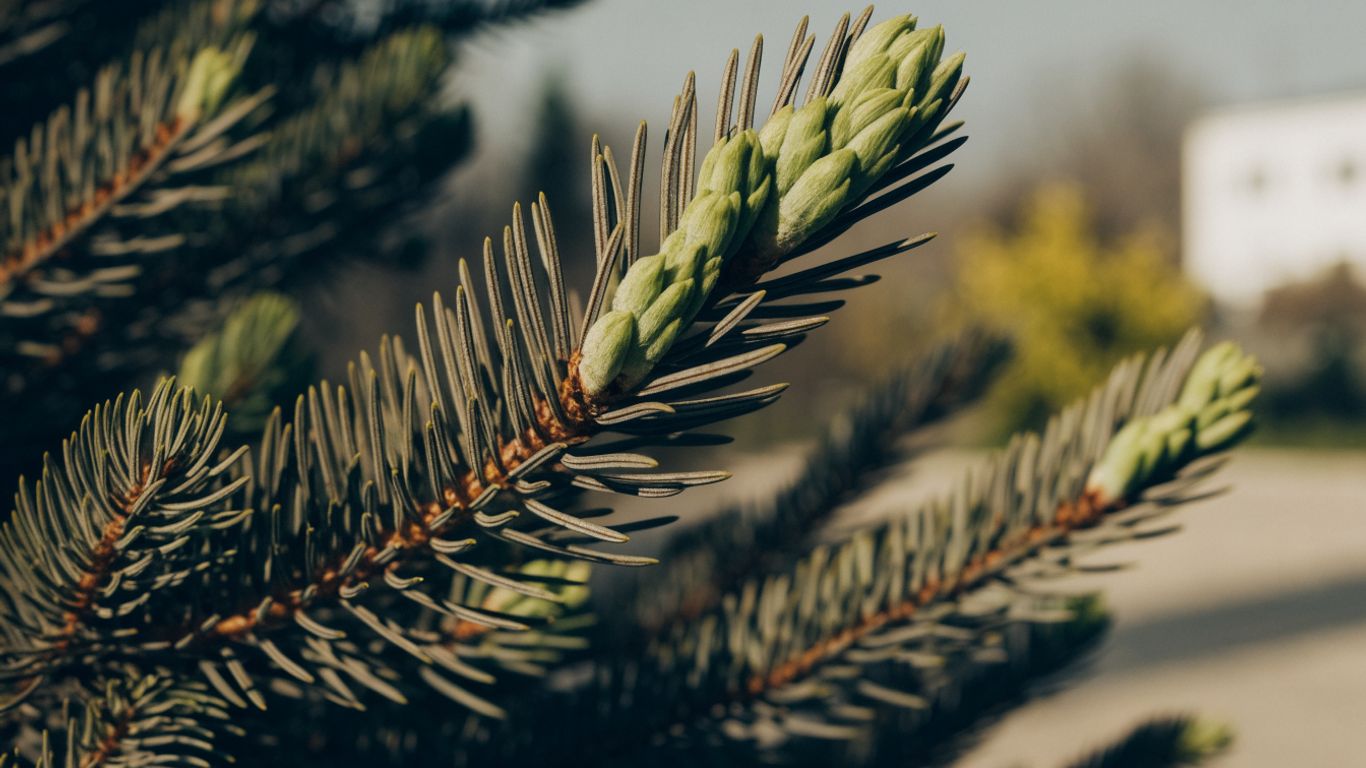
For a spruce tree dying from the bottom up, the outlook depends on how much of the crown and root system is still alive, and whether the underlying cause can be managed. Watch the tree through the growing season, especially for fresh growth at the branch tips and any spread of dieback. If you are unsure, professional arborist services can give you a realistic picture of the tree’s condition.
What to Do About a Spruce Tree Losing Needles
The right response depends on why your spruce is losing needles, so avoid treating it until you have a reasonable idea of the cause. Start with low-risk steps: inspect the tree, reduce avoidable stress, and get help if symptoms keep progressing.
Prune Out Dead and Infected Branches
Dead branches can be removed when they are small and safely within reach, but pruning will not cure every cause of browning. If you suspect needle cast or canker, prune only in dry weather, and clean your tools between cuts so you don’t spread spores to healthy branches. Large, overhead or structurally important limbs are best left to professional tree pruning in Ottawa, where cuts are made correctly at the branch collar.
Water, Mulch and Reduce Stress
When the soil is dry, water slowly around the root zone so the moisture soaks down to the roots instead of running off the surface. Spread mulch in a broad, shallow layer and keep it from touching the trunk. These steps can help a stressed tree, but they won’t fix poor drainage or an active disease on their own.
A few simple checks can help you support the tree without adding more stress:
- Feel the soil a few centimetres below the surface before watering, and avoid keeping it constantly saturated.
- Keep lawn equipment and foot traffic away from the root zone where possible.
- Rake up fallen diseased needles and throw them away rather than leaving them under the tree.
- Avoid applying treatments unless the problem has been identified and the product suits it.
After making changes, watch for new browning and fresh growth rather than expecting damaged needles to recover. If symptoms continue to spread, get an assessment so you can plan around the actual cause.
When a Spruce Tree Dying From the Bottom Up Needs Removal
Browning at the base does not automatically mean a spruce needs to come down. A tree with some dead lower branches may still have a healthy crown and a stable structure, particularly if the cause is limited and manageable. Removal is usually considered when decline is severe or the tree has become a safety concern.
Warning signs include:
- widespread dieback
- a thinning or dead crown
- major dead limbs
- a leaning trunk
- signs that the roots or trunk may be compromised
A declining tree close to a home, driveway or busy path deserves careful attention, because a hazardous tree can quickly become a safety issue. Do not climb the tree or try to cut large limbs yourself.
A certified arborist can assess both the tree’s condition and the risk it poses, and explain whether pruning, monitoring or Ottawa tree removal makes the most sense. Larger trees on private property in Ottawa’s urban area may need a permit before removal, so check the Ottawa Tree Protection By-law before any work is scheduled.
Get a Spruce Tree Assessment From a Certified Ottawa Arborist
If the browning is spreading, several branches are dying, or you can’t tell whether the tree is recovering, an in-person assessment can clarify what is happening. An arborist can inspect the needles, branches, trunk and growing conditions together, rather than relying on a photo alone. This matters most when disease, salt exposure and root stress may be overlapping.
Before the visit, note:
- when you first noticed the symptoms
- how quickly they have changed
- whether the tree was recently planted, or exposed to construction, drought or road salt
Photos from different sides of the tree also help show how the pattern has developed.
The certified arborists at Wright Tree Service assess spruce trees across Ottawa and explain the likely cause in plain language, along with the realistic options for care, monitoring or removal. If your spruce is near a structure or a regularly used space, mention that when you book a tree assessment.
Conclusion
A spruce tree turning brown from the bottom may be reacting to needle cast, canker, root stress, winter exposure or normal needle shedding. Check the pattern, look for specific signs on the needles and bark, and take measured steps to reduce stress. When browning spreads or safety is a concern, a certified arborist can help you understand what is happening and what to do next.
Frequently Asked Questions
Why is my blue spruce turning brown?
The most common cause is Rhizosphaera needle cast, a fungal disease that mainly affects Colorado blue spruce. It starts on the older, lower needles and moves upward over several years. Look for small black specks lined up along the brown needles. Cytospora canker, winter burn, road salt and drought can also brown a blue spruce, so check whether whole branches are dying or the damage is concentrated on one side.
Will brown spruce needles turn green again?
No. Once a spruce needle turns brown, it is dead and will not turn green again. Spruce also cannot grow new needles on bare sections of branch. If the buds at the branch tips are still green and flexible, though, that part of the branch is alive and can keep producing new growth.
Is spruce needle cast contagious to other trees?
Yes, it can spread between spruce trees. Spores are released in wet weather and splash onto nearby branches and trees, which is why the disease often moves from the bottom of one tree upward and to other spruce close by. It mainly affects spruce, especially Colorado blue spruce. Pines are only occasionally affected. Raking up fallen infected needles and pruning only in dry weather help reduce the spread.
Should I cut off the brown lower branches on my spruce?
Branches that are completely dead can be removed, cut back to the trunk just outside the branch collar. Don’t cut partly brown branches back to bare wood and expect them to regrow. Spruce does not sprout new needles from bare sections, so keep any branch that still has green growth at the tips. Prune in dry weather and clean your tools between cuts if disease is suspected.
When is the best time to prune a spruce tree in Ottawa?
Late winter to early spring, while the tree is dormant and before new growth starts, is generally the best time for structural pruning. Dead or broken branches can be removed at other times of year, as long as the weather is dry. Avoid pruning during wet spring periods if needle cast is present, because that is when spores spread most easily.